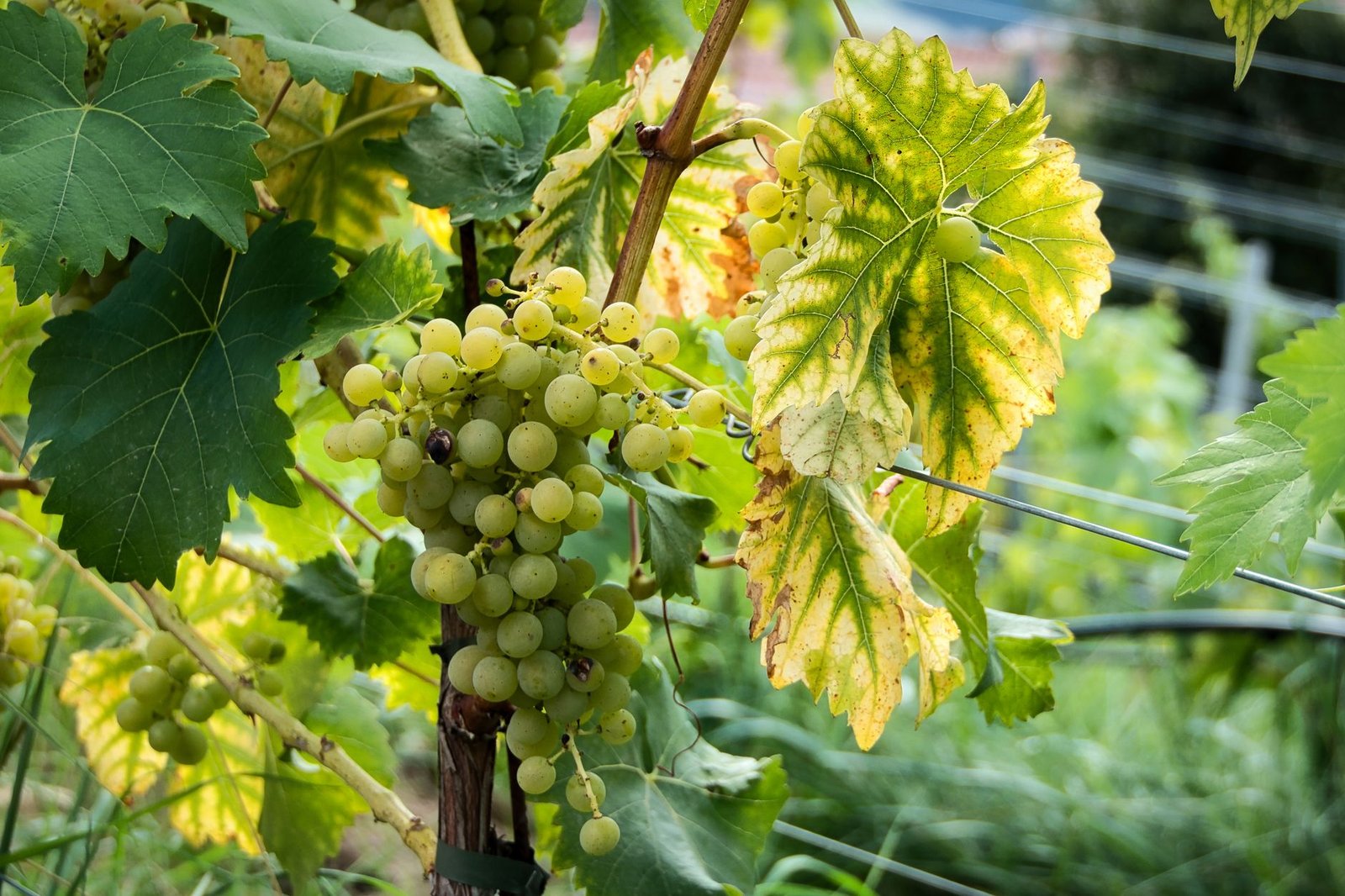
Ask a winemaker which grape shows its farming most honestly and a lot of them will say Riesling. There is nowhere to hide with it. No oak to mask a fault, no soft residual sugar to smooth things over, no big tannin to distract you. A dry Riesling is just fruit, acid and place in a glass, which is exactly why it is one of the world's great wines and why it pairs so naturally with careful, low-input growing. Get the vineyard right and the wine sings. Cut corners and it shows.
This is an organic directory, so the standard we hold ourselves to is simple: we only call a producer certified organic or biodynamic when we can stand behind it, and we put the famous-but-unverified names in their own honest section. Below you will find the Australian producers whose organic or biodynamic credentials are genuine and who make Riesling as a serious part of their range, the regions that do the grape best, and a clear-eyed take on the rest of the field. Every producer we feature is a real listing in the directory, with its public Google review figure shown for the cellar-door experience rather than as a wine score.
Why Riesling suits organic and biodynamic farming
The single biggest reason a vineyard reaches for the sprayer is fungal disease, and fungal disease loves warmth, humidity and still, damp air. Riesling, happily, does its best work in the opposite conditions: high, cool, dry sites with good airflow, like the Clare Valley and Eden Valley ranges, the Great Southern of Western Australia and the elevated Canberra district. In those places the disease pressure that forces heavy chemical programs elsewhere is simply lower, which makes farming with minimal inputs a far more realistic proposition. The grape and the clean-farming philosophy point in the same direction.
That is not to say organic Riesling grows itself. Certification still means real work and real cost, whether it is Australian Certified Organic, NASAA, or Demeter for biodynamic growers. But it does explain why several of Australia's most committed organic and biodynamic estates happen to work with Riesling, and why the grape is such a rewarding place to drink cleanly. If you want the background on what each of those terms actually promises, our explainer on organic, natural and biodynamic wine is the place to start.
The genuinely organic and biodynamic Riesling producers
These are the Australian producers we are confident farm to a certified organic or biodynamic standard, or a genuinely equivalent low-input one, and who make Riesling a real part of what they do. Where a producer is certified, that is the strongest claim there is. Farming and certification can change over time, so confirm the current status with the winery before you buy on that basis.
-
Frankland EstateFrankland River, WAOne of Australia's benchmark Riesling houses and a certified organic grower, tucked into the cool, remote Great Southern at Frankland River. Frankland Estate built its name on single-vineyard Rieslings of real precision and ageworthiness, farmed organically on its home blocks. For a drinker who wants serious, site-driven Riesling with genuine organic credentials, this is close to the top of the list. Rated 5.0 from 4 reviews at the cellar door.
-
Lark Hill WineryBungendore, Canberra districtA Demeter-certified biodynamic estate high above Lake George in the Canberra district, and one of the country's most respected cool-climate producers. Lark Hill has long made Riesling of tension and length from its elevated site, farmed biodynamically rather than just organically, which is the most rigorous clean-farming standard there is. A genuine flagship for biodynamic Australian Riesling. Rated 4.0 from a small number of public reviews.
-
Oranje Tractor WinesAlbany, Great Southern WAA certified organic vineyard near Albany on the south coast of Western Australia, farming without synthetic chemicals and making cool-maritime Riesling among its range. Oranje Tractor is a small, hands-on operation with a strong environmental ethos across the whole property, and its Great Southern setting is prime Riesling country. A lovely example of certified-organic Riesling from a boutique grower. Rated 4.8 from 49 reviews.
-
Smallfry WinesAngaston, Barossa & Eden ValleyA certified organic and biodynamic producer based at Angaston, drawing on Eden Valley and Barossa fruit and known for a minimal-intervention, do-more-with-less philosophy. Smallfry works Eden Valley Riesling among its aromatic whites, farmed to a genuinely clean standard rather than a marketing one. A great pick if you want organic Riesling with a natural-wine sensibility. Rated 4.6 from a small number of public reviews.
Why only four: plenty of Australian wineries grow Riesling, and many farm more cleanly than their labels spell out, but we will only badge a producer as certified organic or biodynamic where we are confident it is true. That short, honest list is worth more than a long one padded with names we cannot stand behind. If certification is your hard requirement, start here and confirm current status at the cellar door.
The Riesling heartlands: Clare Valley and Eden Valley
No guide to Australian Riesling can skip the two South Australian valleys that made the grape famous here. The Clare Valley and the neighbouring Eden Valley are the spiritual home of the bone-dry, lime-and-slate Australian style: taut, mineral, thrillingly acidic in youth and capable of ageing into something honeyed and complex over a decade or more. If you are learning Riesling, this is the reference point.
Several respected Clare and Eden producers appear in our directory with an organic-farming description, and are well worth visiting, though we would encourage you to confirm each one's certification directly rather than assume it. In the Clare Valley, Pikes Wines at Sevenhill has moved substantially towards organic viticulture and is rated 4.7 from 239 reviews, Mount Horrocks at Auburn is a benchmark small producer rated 4.9 from 38 reviews, and Knappstein at Clare is a long-established name rated 4.7 from 83 reviews. In the Eden Valley, Pewsey Vale is one of the region's historic Riesling specialists. Treat these as strong Riesling addresses first, and check the current farming detail with the producer if organic certification is the deciding factor for you.
| Region | Riesling character | Why it suits clean farming |
|---|---|---|
| Clare Valley, SA | Bone-dry, lime and mineral, ages superbly | Warm days but cool nights and low humidity in the ranges |
| Eden Valley, SA | Floral, fine-boned, slate and citrus | High altitude, cool air, free-draining soils |
| Great Southern, WA | Intense, cool-maritime, long-lived | Remote, cool, airy sites with low disease pressure |
| Canberra district | Racy, high-acid, tightly wound | Elevated, continental, cold nights |
| Tasmania | Delicate, off-dry to dry, high acidity | Cool maritime climate, long slow ripening |
Dry, off-dry or sweet: choosing your style
One of Riesling's quiet gifts is range. The Australian benchmark is bone-dry, all citrus and mineral and racy acidity, but the same grape makes gorgeous off-dry wines where a touch of sugar is held in tension by that natural acidity, and some of the country's greatest sweet wines, from cordon-cut styles to botrytis-affected dessert Rieslings. None of these is more organic than another. Sweetness is a stylistic decision made in the vineyard and winery, not a farming one, so a certified organic estate can make a bone-dry or a lusciously sweet Riesling with equal integrity.
For everyday drinking, a dry Clare or Eden Valley style is the classic, brilliant with seafood, roast chicken or a squeeze of lime over anything. For something to cellar, look to the single-vineyard bottlings from producers like Frankland Estate, which reward five to ten years in the rack. And if you want to understand exactly which words on the back label are audited and which are just marketing, our guide to reading an Australian organic wine label breaks it down.
An ACO, NASAA or Demeter logo is audited proof. The words organic or natural on their own are not, so look for the certification if it matters to you.
The best organic Riesling comes from high, dry, airy regions where low disease pressure makes minimal-input farming genuinely achievable.
Clare and Eden Valley dry styles are the reference, but off-dry and sweet Rieslings can be just as cleanly farmed. Sweetness is a choice, not a shortcut.
Cellar door and online sales are often the best way to reach small organic producers and their back vintages. Use the directory to find them.
The honest picture: great Riesling that is not certified organic
It would be misleading to imply that only organic producers make great Australian Riesling. Some of the country's most celebrated Riesling names, the benchmark Clare and Eden Valley estates whose wines define the style, are not certified organic, and we make no such claim about them. Grosset in the Clare Valley, for example, is one of Australia's most revered Riesling producers and does farm to a certified organic standard on its home vineyards, but it is not currently listed in this directory, so we mention it only for context rather than linking it. Other famous names farm conventionally and make superb wine doing so.
The point of a directory like this is not to pretend the conventional greats do not exist. It is to help you tell the difference between a wonderful Riesling and a wonderful Riesling that is also certified clean, so you can choose on the basis that matters to you. If certification is not your priority, the field is wonderfully wide. If it is, the shortlist above is where to start, and the honest Clare and Eden names are worth a direct conversation about how they farm. For more everyday value across styles, our guide to organic wine under $25 is a good companion, and Riesling lovers who also drink red will find plenty in our best organic Shiraz roundup.
The bottom line
Riesling is the honest grape, and it rewards honest farming. Australia's best genuinely organic and biodynamic examples come from exactly the cool, high, dry regions where the grape and the clean-farming philosophy align: Frankland Estate and Oranje Tractor in the Great Southern, Lark Hill above the Canberra plains, and Smallfry drawing on the Eden Valley. Add the benchmark Clare and Eden Valley houses for the classic dry style, confirm certification where it matters to you, and you have a way into one of the world's great white wines that is as clean as it is delicious. To see every organic and biodynamic producer in one place, with region and cellar-door detail, start with the full directory.