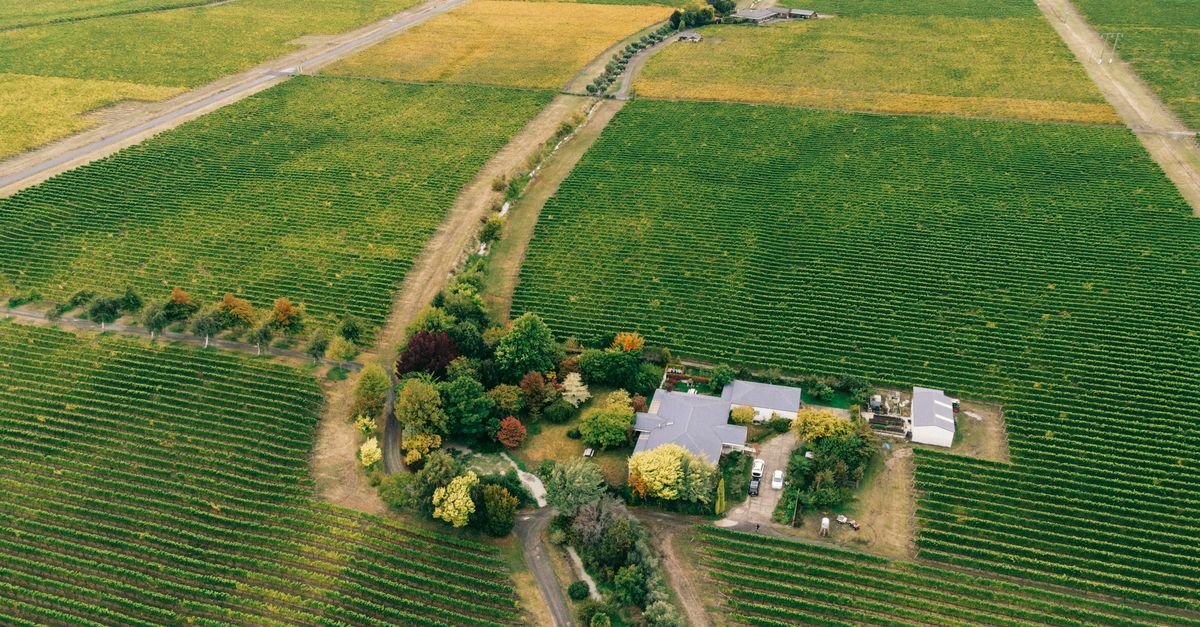
Pinot Noir has a reputation as the heartbreak grape, and winemakers say it with a certain pride. It is thin-skinned, early-ripening and fussy about where it grows, ruthless in exposing a poor site or a careless hand. Get it right, though, and there is no red wine quite like it: pale in the glass, perfumed with red cherry and rose and forest floor, silky rather than heavy, and utterly transparent about the place it came from. That transparency is the whole point of Pinot, and it is also why the grape and organic farming belong together.
Because Pinot Noir shows its site so clearly, growers who want the vineyard to speak for itself are drawn to farming it cleanly, without the synthetic sprays and fertilisers that can flatten a wine's sense of place. Add to that the fact that Pinot needs a cool climate, and you find it planted in exactly the pockets of Australia where organic and biodynamic producers have chosen to cluster: maritime Tasmania, the hills above Adelaide, the ranges north of Melbourne, the cool folds of the Yarra and the Mornington Peninsula. This guide explains why that overlap exists, which regions do organic Pinot best, and the real producers in our directory worth putting on your list. As always, we only call a producer organic or biodynamic where the evidence genuinely supports it.
Why Pinot Noir and organic farming fit so well
There is a practical reason and a philosophical one. Practically, Pinot Noir is a delicate, terroir-driven grape that rewards restraint. Its thin skins and tight bunches make it vulnerable, but they also mean that whatever you do in the vineyard shows up almost undisguised in the glass. Heavy chemical farming tends to standardise fruit and mute the fine aromatic detail that makes Pinot worth drinking, so growers chasing the grape's delicacy have a strong incentive to farm gently. Philosophically, Pinot attracts a certain kind of obsessive, site-focused winemaker, and that same mindset draws people towards organic and biodynamic methods that treat the vineyard as a living system rather than a factory floor.
The other half of the story is geography. Pinot Noir will only ripen well in cool climates, where a long, gentle growing season lets the grape build flavour and perfume while holding onto the bright acidity that gives the wine its lift. In Australia that means the far south and the higher, cooler sites: Tasmania above all, then the Mornington Peninsula, the Yarra Valley, the Macedon Ranges, the Adelaide Hills and Gippsland. These are also, not coincidentally, the regions where many of the country's most committed clean farmers have planted. If you want to understand what the certifications on the label actually promise, our guide to reading an Australian organic wine label breaks it down, and our explainer on organic, natural and biodynamic wine sorts out the terms.
Where organic Pinot Noir grows best in Australia
No single region owns Australian Pinot, and each cool pocket gives the grape a different accent. Tasmania is the country's Pinot powerhouse, with a cool maritime climate that produces intense, structured, age-worthy wines. The Mornington Peninsula and the Yarra Valley, both within easy reach of Melbourne, make more perfumed, red-fruited styles and are dense with cellar doors. The Macedon Ranges, high and cold north of the city, turns out some of the most precise and sought-after Pinot in the land. The Adelaide Hills sits cool above the warm Barossa and McLaren Vale plains, and Gippsland's scattered growers have a cult following. Our region guides to organic wineries on the Mornington Peninsula and in the Yarra Valley go deeper on two of the most visitable.
| Region | Pinot Noir character | Why it suits clean farming |
|---|---|---|
| Tasmania | Intense, structured, age-worthy | Cool maritime climate; strong organic and biodynamic scene |
| Mornington Peninsula | Perfumed, red-fruited, silky | Cool maritime sites; many small terroir-focused growers |
| Yarra Valley | Elegant, savoury, medium-bodied | Cool hills; a hub for minimal-intervention winemakers |
| Macedon Ranges | Precise, high-acid, cellar-worthy | High, cold sites; home to certified biodynamic estates |
| Adelaide Hills | Bright, juicy, aromatic | Cool altitude above warmer SA regions; natural-wine hub |
| Gippsland | Concentrated, cult-followed | Cool, marginal sites farmed by dedicated small growers |
Genuinely organic and biodynamic Pinot Noir producers
The producers below are the ones we can point to with confidence as organic, biodynamic or genuinely minimal-intervention, drawn from the wineries in our directory. Ratings and review counts are public Google data and reflect the cellar-door experience, not a wine score. Where a producer is famous but its clean-farming credentials are not verified, we have kept it out of this section and been honest about it further down.
Stefano Lubiana Wines, Tasmania
Stefano Lubiana is one of Australia's biodynamic pioneers, farming its Derwent Valley estate near Granton with a long-standing commitment to certified biodynamic viticulture. The wines, especially the Pinot Noir, are benchmarks for what clean farming can do in Tasmania's cool maritime climate: intense, savoury and built to age. If you want to taste the biodynamic case for Australian Pinot in a single bottle, this is the classic place to start.
Cobaw Ridge, Macedon Ranges
Cobaw Ridge sits high and cold in the Macedon Ranges and farms biodynamically, a genuinely clean estate rather than a marketing gesture. It is a small, cult-followed producer with a perfect 5.0 rating from 9 reviews, and its cool-site reds are exactly the kind of precise, structured wine the Macedon Ranges is prized for. A serious stop for drinkers who care how the grapes were grown.
Bindi Wines, Macedon Ranges
Bindi Wines at Gisborne is one of the most revered Pinot names in the country, a small family estate farming its Macedon Ranges vineyards cleanly and with obsessive attention to site. The Pinot Noir here is sought-after and cellar-worthy, and the estate is a byword for terroir-driven Australian Pinot. It holds a 4.5 rating and rewards anyone who can track the wines down.
Curly Flat Vineyard, Macedon Ranges
Curly Flat at Lancefield is another Macedon Ranges standard-bearer, dedicated to careful, low-intervention viticulture and Burgundian-styled Pinot Noir. It is one of the region's most loved cellar doors, rated 4.9 from 68 reviews, and its wines are a reliable introduction to the cool, high-altitude Macedon style.
Mac Forbes Winery, Yarra Valley
Mac Forbes is a leading light of the Yarra Valley's minimal-intervention movement, making finely detailed, site-specific Pinot Noir from cool sub-regions of the valley. The wines are savoury and precise, and the approach is exactly the kind of hands-off, terroir-first winemaking that suits Pinot. We present it as a minimal-intervention grower rather than a certified estate, so confirm current practice if certification matters to you.
Gentle Folk, Adelaide Hills
Gentle Folk works out of Forest Range in the Adelaide Hills, crafting organic, minimal-intervention wines including bright, expressive Pinot. It is one of the leading names in the Hills natural-wine scene, small-batch and thoughtful, and a great example of how the cool Adelaide Hills lends itself to clean, characterful Pinot Noir.
A note on certification and honesty: "Certified" (ACO or NASAA for organic, Demeter for biodynamic) is the strictest, independently audited signal. Stefano Lubiana and Cobaw Ridge are the names here most firmly associated with biodynamic farming, while Bindi, Curly Flat, Mac Forbes and Gentle Folk farm cleanly with organic-leaning or minimal-intervention approaches to varying and sometimes uncertified degrees. Farming practices and certifications change, so when it matters, always confirm with the producer directly.
Tasmania's Huon Valley: Sailor Seeks Horse and Home Hill
Down in Tasmania's cool Huon Valley, Sailor Seeks Horse is a small, admired producer working organically and with minimal intervention to make structured, terroir-driven Pinot Noir. Nearby, Home Hill at Ranelagh is a well-known Pinot and sparkling specialist committed to working with nature rather than against it, and holds a 4.0 rating from 240 reviews. Both show why the far south of Tasmania has become such fertile ground for clean-farmed Pinot.
More cool-climate cellar doors worth knowing
Beyond the confirmed clean-farming names above, the Pinot regions are full of excellent, well-loved wineries whose organic status we cannot independently verify. It would be misleading to badge them all as organic, so we list them honestly for their reputation and their Pinot rather than a farming claim. Several describe themselves as organic or sustainable, but without a certification logo that is a claim to confirm with the cellar door, not a guarantee.
Holm Oak in the Tamar Valley is a much-loved Tasmanian producer of clear, place-driven wines including Pinot Noir, rated 4.8 from 167 reviews.
Tolpuddle farms a celebrated old vineyard in the Coal River Valley, producing some of Tasmania's most acclaimed Pinot. It holds a 4.8 rating from 31 reviews.
Delamere at Pipers Brook is a respected cool-site Tasmanian estate known for Pinot Noir and sparkling, rated 4.7 from 60 reviews.
Yabby Lake at Tuerong is a benchmark Mornington Pinot producer with a popular cellar door, rated 4.6 from 458 reviews.
Crittenden at Dromana is a pioneering Mornington family estate with a restaurant, making elegant Pinot and rated 4.6 from 268 reviews.
Pike & Joyce at Lenswood is a cool-climate Adelaide Hills estate known for aromatic Pinot Noir, rated 4.8 from 706 reviews.
Others worth a detour include Oakridge Wines, a standout Yarra Valley producer rated 4.6 from over a thousand reviews; Freycinet Vineyards on Tasmania's east coast, a historic Pinot name rated 4.7 from 152 reviews; and Frogmore Creek in the Coal River Valley, a busy cellar door and restaurant rated 4.6 from 979 reviews. As with the grid above, we list these for their wines and reputation, not a verified organic claim, so ask at the cellar door if clean farming is your priority.
How to buy good organic Pinot Noir
Start with the region. Because Pinot needs cool conditions, an Australian Pinot from Tasmania, the Mornington Peninsula, the Yarra Valley, the Macedon Ranges, the Adelaide Hills or Gippsland is far more likely to deliver the perfume and freshness the grape is prized for than one from a warm region. Then look for the certification logo if organic status matters to you: ACO or NASAA for organic and Demeter for biodynamic are the independently audited signals. Plenty of small growers farm cleanly without paying to certify, so the absence of a logo is not proof of heavy farming, but it does mean the claim has not been audited, and the honest move is to ask.
On price, good Pinot is rarely the cheapest red on the shelf, because it is low-yielding and demands attention in both vineyard and winery. Expect to pay a little more than you would for an entry-level Shiraz or Cabernet, and treat the mid-range and up as where cool-climate Australian Pinot really starts to sing. If you are building a case to cellar, Tasmanian and Macedon Ranges Pinot in particular can age gracefully for years. And if you would rather taste before you commit, the cellar doors listed above, from Curly Flat to Yabby Lake, are made for exactly that. To map every producer by region and cellar-door access, the full directory lets you filter down to the cool-climate estates near you.
Buying without travelling: You do not have to drive to Tasmania or the Macedon Ranges to drink their best. Biodynamic and organic names like Stefano Lubiana, Bindi and Cobaw Ridge sell through specialist retailers and their own channels, and cool-climate Pinot cellars beautifully, so a few bottles put away will reward patience. For clean-farmed, site-driven Australian Pinot, those certified and minimal-intervention estates are the place to begin.
The bottom line
Pinot Noir and clean farming are a natural match: a grape that hides nothing, grown by people who want the vineyard to speak, in the cool corners of Australia where organic and biodynamic producers have chosen to plant. Tasmania leads the way, with the Macedon Ranges, Mornington Peninsula, Yarra Valley and Adelaide Hills close behind, and names like Stefano Lubiana, Cobaw Ridge, Bindi, Curly Flat, Mac Forbes and Gentle Folk showing what genuinely clean Australian Pinot can be. The honest position is that most Pinot regions are a mix of certified, uncertified-but-clean and conventional growers, so check each producer rather than assume. For drinkers who care equally about how the wine tastes and how the grapes were grown, cool-climate organic Pinot is one of the most rewarding places to look, and the directory will help you find every organic grower here and right across Australia.