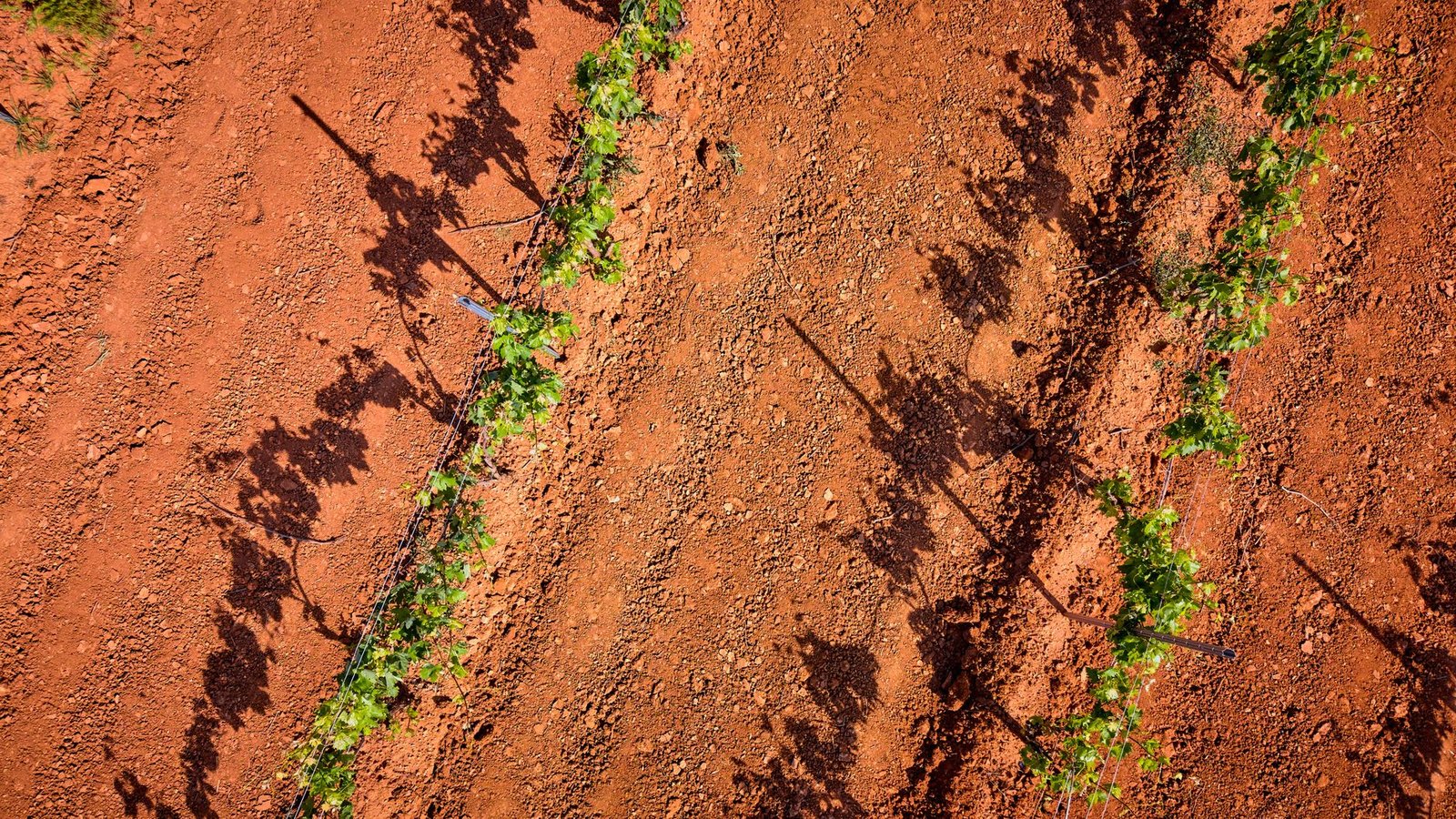
Heathcote is one of Australia's great red-wine secrets, though the secret is well and truly out among Shiraz lovers. Sitting in central Victoria roughly ninety minutes north of Melbourne and a short hop from Bendigo, this compact region has built an international reputation on the back of one grape and one remarkable strip of dirt. The Shiraz here is deep, richly fruited and generous, yet it carries a savoury freshness and structure that keeps it from tipping into heaviness. That balance is the whole story of Heathcote, and it starts underground.
What makes the region worth a dedicated guide is not just the quality of the wine but the character of its growers. Heathcote attracted independent-minded winemakers early, and among them are some of the most committed biodynamic and organic farmers in the country. Jasper Hill has been working biodynamically for decades, and the Australian outpost of the celebrated French house M. Chapoutier brought its own long biodynamic tradition to the same red soil. This guide walks through the producers in our directory, explains what makes Heathcote's terroir so unusual, and sets out how to plan a tasting trip around the town and the Mount Camel Range.
What makes Heathcote special: the ancient red soil
The heart of Heathcote is a long, narrow band of Cambrian greenstone soil that runs north to south along the Mount Camel Range. This weathered red earth is roughly 500 million years old, one of the oldest and most distinctive vineyard soils in the country. It is deep and free-draining but holds moisture well down in the profile, which lets the vines keep growing through a dry Australian summer while still being stressed just enough to concentrate flavour in the fruit. Growers here talk about the soil the way other regions talk about vintage; it is the single feature that defines the place.
The climate does the rest. Heathcote sits at altitude along the range, giving it warm, sunny days that ripen Shiraz fully and cool nights that lock in acidity and aromatic freshness. That day-to-night swing is why Heathcote reds manage to be both powerful and balanced rather than jammy. The combination of ancient red soil and a continental climate with big diurnal shifts is unusual, and it is the reason Heathcote Shiraz has earned a following well beyond Victoria, appearing on serious wine lists around the world.
Shiraz is the undisputed flagship, but it is not the whole picture. The same warm days and old soils suit a growing cast of Mediterranean and Rhone varieties. Grenache, Nebbiolo and Italian grapes such as Sangiovese have all found a home here, and several growers are building reputations on them. For a broader look at how the grape behaves across the country, our guide to the best organic Shiraz in Australia puts Heathcote in national context.
Organic and biodynamic growers in Heathcote
Heathcote has a real, verifiable core of organic and biodynamic producers, which is more than many Australian regions can say. We have been deliberately careful below: we only describe a winery as organic or biodynamic where the evidence genuinely supports it. Where a respected Heathcote name is simply a fine producer without a confirmed organic credential, we say so plainly rather than imply otherwise. Our explainer on reading an Australian organic wine label unpacks what each certification actually means.
Jasper Hill Vineyard, Heathcote
Jasper Hill is the biodynamic pioneer of the region and one of the most quietly revered names in Australian wine. The Laughton family has farmed this dry-grown vineyard biodynamically for decades, and its flagship Georgia's Paddock Shiraz is a benchmark for what Heathcote's ancient soil can produce: deep, structured and built to age. This is a genuinely biodynamic estate, not a marketing gesture, and it carries a 4.9 rating from 13 Google reviews. If you visit only one Heathcote producer for the organic story, this is it.
M. Chapoutier Australia Winery & Cellar Door, Heathcote
M. Chapoutier Australia is the local arm of the renowned French house Chapoutier, a family long committed to biodynamic farming across its estates in the Rhone and beyond. That biodynamic philosophy travelled with them to Heathcote, where they were drawn by the same ancient red soil that made the region's reputation. The cellar door offers a rare chance to taste a serious biodynamic producer with one foot in France and one in central Victoria, and it holds a 4.9 rating.
Vinea Marson, Mount Camel
Vinea Marson sits on the Mount Camel Range and works with an organic-leaning, minimal-intervention philosophy. The focus here is on Italian varieties alongside Shiraz, reflecting the winemaking family's heritage and the way those grapes suit Heathcote's warm days and old soils. It is the kind of thoughtful, small-scale operation that in-the-know drinkers seek out, and it earns a 4.9 rating from 52 reviews. We present it as an organic-leaning, minimal-intervention grower rather than a certified estate, so confirm the current farming approach with the cellar door if certification matters to you.
A note on certification and honesty: Ratings and review counts here are drawn from public Google data and reflect the cellar-door experience, not a wine score. "Certified" (ACO or NASAA for organic, Demeter for biodynamic) is the strictest, independently audited signal. Jasper Hill and M. Chapoutier are the Heathcote names most associated with biodynamic farming, and Vinea Marson is organic-leaning and minimal-intervention. Heathcote is a mixed region with both certified-organic or biodynamic estates and conventional ones, so when it matters, always ask the producer directly.
More respected Heathcote producers worth knowing
Beyond the confirmed organic and biodynamic estates, Heathcote is packed with excellent growers, and it would be misleading to slap an organic label on all of them. Many Heathcote growers farm organically or with minimal intervention, but not all hold certification, and some are conventional. The producers below are essential stops on any Heathcote trip, described honestly for their reputation and their wines rather than a farming claim we cannot verify.
Silver Spoon Estate sits high on the Heathcote Ridge along the Mount Camel Range, with a strong focus on sustainable farming and estate-grown Shiraz. It is one of the region's most popular cellar doors, rated 4.9 from 171 reviews.
Sanguine Estate is a family operation with a long-held reputation for acclaimed, generously fruited Heathcote Shiraz. A reliable and well-loved name in the district, it holds a 4.8 rating from 67 reviews.
Heathcote Winery is a historic estate right on High Street in the middle of town, an easy and characterful first stop. It carries a 4.7 rating from 88 reviews.
Heathcote Wine Hub is a cellar-door hub on High Street showcasing multiple local producers under one roof, ideal for tasting widely in a single visit. It holds a 4.8 rating from 118 reviews.
Wild Duck Creek Estate is the cult name behind the famous "Duck Muck" Shiraz, a small producer with an outsized reputation among collectors of big, concentrated Heathcote reds.
The Bridge Vineyard is a boutique Heathcote grower with a devoted following, rated a perfect 5 from 24 reviews. A worthwhile stop for those chasing small-batch character.
Rounding out the shortlist, Flynns Wines is a small family-run Heathcote producer with a warm, personal cellar door and a 4.8 rating from 18 reviews. Like the others in this section, we list it for its reputation and wines rather than a verified organic claim. If any of these have moved to certified or minimal-intervention farming since we last checked, the cellar door is the place to confirm it.
| Winery | Area | Known for |
|---|---|---|
| Jasper Hill | Heathcote | Biodynamic pioneer; Georgia's Paddock Shiraz |
| M. Chapoutier Australia | Heathcote | Biodynamic; French house on Heathcote soil |
| Vinea Marson | Mount Camel | Organic-leaning; Italian varieties and Shiraz |
| Silver Spoon Estate | Mount Camel (Heathcote Ridge) | Sustainable farming; estate Shiraz |
| Sanguine Estate | Heathcote | Acclaimed family-made Shiraz |
| Heathcote Winery | Heathcote (High St) | Historic estate in the heart of town |
| Heathcote Wine Hub | Heathcote (High St) | Multi-producer cellar-door hub |
| Wild Duck Creek | Heathcote | Cult "Duck Muck" Shiraz |
The grapes: Shiraz first, then a Mediterranean cast
If you taste one thing in Heathcote, taste Shiraz. The style here is defined by that ancient red soil and the big day-to-night temperature swing: deep colour, ripe dark-fruit flavours of blackberry and plum, a savoury, sometimes peppery edge and enough acidity and tannin structure to age gracefully for a decade or more. It is fuller than cool-climate Shiraz from further south, but rarely the alcoholic blockbuster some warm regions produce. That poise is exactly what has earned Heathcote its reputation.
Around the Shiraz, a Mediterranean cast is thriving. Grenache brings a warmer, more perfumed and juicy red into the mix, while Nebbiolo and Italian varieties such as Sangiovese give growers a way to express the region's warmth with more savoury, structured styles. Vinea Marson in particular has leaned into the Italian side of Heathcote. For visitors, this variety is a bonus: you can taste a benchmark Australian Shiraz and something genuinely unusual at the same cellar door.
Planning a Heathcote tasting trip
Heathcote is roughly a 1.5-hour drive north of Melbourne and sits close to Bendigo, which makes it an easy long day trip and a natural overnight or weekend escape. One of its great advantages is how walkable the town itself is: High Street has a cluster of cellar doors within a short stroll, including the Heathcote Wine Hub, which puts several local producers under one roof and is a smart first stop for tasting widely before you drive out to individual estates. From there, the vineyards along the Mount Camel Range, including Jasper Hill, Vinea Marson and Silver Spoon, are a short drive into the hills.
Because the best organic and biodynamic producers here tend to be small and family-run, a little planning beats turning up and hoping. Always confirm cellar-door hours and whether tastings need booking before you set out; tiny operations such as Jasper Hill and Wild Duck Creek may keep limited or appointment-only hours, especially midweek and in winter. If clean-farmed wine is your priority, anchor your route on Jasper Hill, M. Chapoutier and Vinea Marson, then build outward to the other estates for context and contrast. To map every producer in the region, the full directory lets you filter by area and cellar-door access.
How to tell organic from conventional in Heathcote
Heathcote is an honest example of a mixed region. It has genuinely biodynamic estates like Jasper Hill and M. Chapoutier, organic-leaning growers like Vinea Marson, a swathe of producers who farm sustainably or with minimal intervention without certification, and some conventional estates too. That mix is normal for Australian wine country, and it means the region as a whole should not be described as "organic". The label on the bottle and the person behind the cellar-door bar are your best guides.
The clearest signal is a certification logo: ACO or NASAA for organic, and Demeter for biodynamic. If there is no logo, that does not mean the wine is heavily farmed; plenty of Heathcote growers work cleanly without paying for certification. It simply means the claim has not been independently audited, so the honest move is to ask. A quick question at the cellar door about how the vineyard is farmed will tell you far more than any regional generalisation, and most Heathcote growers are happy to talk soil and spray programmes at length.
Buying without travelling: You do not need to make the drive to drink Heathcote's best. Biodynamic names like Jasper Hill and M. Chapoutier sell through specialist retailers and their own channels, and Heathcote Shiraz in particular cellars beautifully. For deep, age-worthy Shiraz grown on ancient red soil and farmed cleanly, those biodynamic estates are the place to start.
The bottom line
Heathcote earns its reputation twice over: once for the world-class Shiraz its 500-million-year-old red soil produces, and again for a core of growers genuinely committed to biodynamic and organic farming. Jasper Hill and M. Chapoutier lead that organic story, with Vinea Marson farming in the same spirit, while a strong supporting cast of estates from Silver Spoon to Sanguine, Wild Duck Creek and the Heathcote Wine Hub round out one of Victoria's most rewarding wine trips. The honest position is that Heathcote is a mixed region, so check each producer's practices rather than assume. For drinkers who care equally about how the wine tastes and how the grapes were grown, the biodynamic Heathcote names are a reliable place to begin, and the directory will help you find every organic grower here and right across Australia.