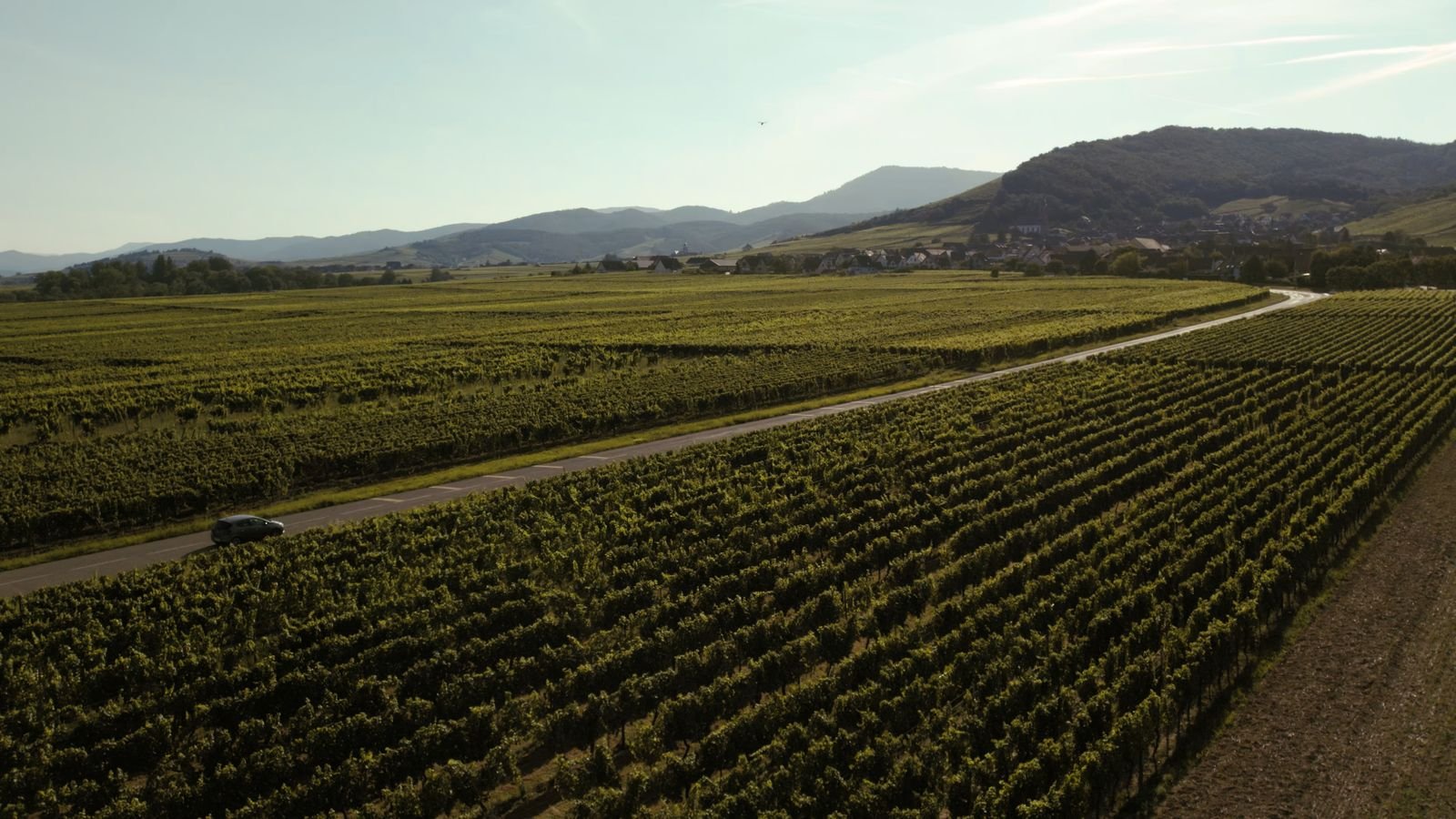
The Clare Valley is one of Australia's most distinctive wine regions, and one of its most quietly self-assured. Tucked into the hills about two hours north of Adelaide, it is celebrated above all as the spiritual home of Australian Riesling: bone-dry, lime-scented whites that age for decades and have set the benchmark for the style nationally. What surprises first-time visitors is that the same district makes some of South Australia's most structured Shiraz and Cabernet Sauvignon. Few regions in the country do both white and red so seriously, and that range is a big part of why Clare rewards a closer look.
It is also a region with deep roots in clean farming. The continental climate here, warm days, cool nights and a relatively dry growing season, brings far less disease pressure than humid maritime regions, which makes lower-input and organic viticulture genuinely workable. Some of Clare's vineyards were among the first in the state to be certified organic. This guide walks through the producers in our directory who farm organically or biodynamically, sets out the grapes that define the valley, and explains how to plan a tasting trip around the towns of Clare, Sevenhill, Watervale, Penwortham and Auburn.
Organic and biodynamic growers in the Clare Valley
Clare's organic community is small but serious. A handful of growers are formally certified, while several more farm cleanly and with minimal intervention without holding a certificate. Below is a shortlist from our directory, each linked to its full listing. We have been deliberately careful here: the Clare Valley has many excellent producers, but we only describe a winery as organic or biodynamic where the evidence genuinely supports it. Where a famous Clare name is not verifiably organic, we say so plainly rather than imply otherwise. Our explainer on organic, natural and biodynamic wine unpacks what each term actually means.
Mount Horrocks Wines, Auburn
Mount Horrocks is the Clare Valley's standout certified producer. Winemaker Stephanie Toole farms a fully certified organic and biodynamic vineyard at Watervale, working it with a tiny-production, quality-first philosophy that has made the label one of the most respected in the district. Mount Horrocks is best known for its Watervale Riesling and its rare Cordon Cut dessert Riesling. It holds a 4.9 rating from 38 Google reviews, a strong signal for a small, focused cellar door.
Adelina Wines, Clare
Adelina Wines draws fruit from one of Clare's earliest certified organic vineyards, on Polish Hill River, and farms with a low-intervention ethos focused on honest, expressive wines. It is a smaller, boutique operation than the big estates, the kind of name in-the-know drinkers seek out, and earns a 4.9 rating from its reviews. Adelina is a good example of how Clare's organic story runs through its vineyards as much as its cellars.
The Wilson Vineyard, Polish Hill River
The Wilson Vineyard is a Polish Hill River institution with a long-held reputation for minimal-intervention winemaking and characterful, sometimes idiosyncratic wines, including a rare Clare zinfandel. We have not been able to confirm a formal organic certification for the estate, so we present it here as a notable low-intervention Clare grower rather than a certified-organic one. Confirm the current farming approach with the cellar door if certification matters to you.
A note on certification: Ratings and review counts above are drawn from public Google data and reflect the cellar-door experience, not a wine score. "Certified" (ACO or NASAA for organic, Demeter for biodynamic) is the strictest, independently audited signal. Mount Horrocks and Grosset are the Clare names most associated with full certification; Adelina is linked to one of the district's first certified organic vineyards. Other Clare growers farm with varying degrees of organic and sustainable practice without certification. When it matters, always ask the producer directly.
Famous Clare names worth knowing (the honest picture)
Plenty of the Clare Valley's best-known cellar doors are not organic, and it would be misleading to suggest otherwise. They are still essential stops on any Clare trip, so here they are described honestly, for their history and their wines rather than a farming claim. If your priority is certified-organic drinking, treat these as conventional but excellent; if you simply want the best of Clare, they belong on the list.
Sevenhill Cellars, Sevenhill
Sevenhill Cellars is the Clare Valley's oldest winery, founded by Jesuit priests in 1851 to make sacramental wine, and it still operates on that historic estate with its beautiful stone church. It is a must-visit for the history and the Riesling, and the team speaks to sustainable practice in the vineyard, but we have not seen evidence of full organic certification, so we list it here on its considerable other merits. It holds a 4.5 rating from 228 reviews.
Pikes Wines, Sevenhill
Pikes Wines, established in 1984, is one of Clare's most reliable names for Riesling and Shiraz, with a well-established Sevenhill cellar door (and its own brewing arm for non-drinkers in the group). We present Pikes for its track record and wines rather than an organic claim, which we could not verify. It carries a 4.7 rating from 239 reviews.
Paulett Wines, Polish Hill River
Paulett Wines has been a Polish Hill River fixture since the family relocated from the Hunter in the early 1980s, and its hilltop cellar door has some of the best views in the valley alongside consistent, well-made Riesling and reds. As with the others in this section, we list it honestly for its reputation rather than an organic credential. It holds a 4.8 rating from 276 reviews.
Crabtree Wines, Watervale
Crabtree Wines is a boutique Watervale producer with a renovated historic homestead and a loyal following for its limited-production wines. It is a lovely, low-key cellar door, rated 4.9 from 150 reviews, and we include it for that charm rather than a verified organic claim.
What grows here: Riesling first, then serious reds
The Clare Valley is, above all else, Riesling country. The dry continental climate, with its big day-to-night temperature swings, lets the grape ripen slowly while holding its piercing natural acidity. The result is a style the rest of the world borrows from: bone-dry, lime-and-lemon, faintly mineral whites that are tightly wound when young and unfold into toast and honey over ten or twenty years in the cellar. If you taste one thing in Clare, taste Riesling, ideally a few from different sub-districts side by side.
What sets Clare apart from cooler white-wine regions is that it is also a heavyweight for red. The warmer pockets ripen Shiraz and Cabernet Sauvignon to full, firm, age-worthy styles with real structure. Site matters enormously: the same grape tastes different grown on the cooler, higher slate of Polish Hill River versus the limestone of Watervale and Auburn to the south.
Higher and cooler in pockets, with slate and shale soils that give Riesling a flinty, tightly structured edge and reds real firmness. Home to several of the district's organic and minimal-intervention growers.
Limestone-rich soils that produce a slightly softer, more floral and lime-juicy Riesling, plus generous Shiraz. The Watervale and Auburn end anchors the Riesling Trail and a cluster of cellar doors.
| Grape | Style in the Clare Valley | What to expect |
|---|---|---|
| Riesling | Bone-dry, lime, mineral | The flagship; ages superbly for 10-20 years |
| Shiraz | Full-bodied, firm, savoury | Structured reds built to cellar |
| Cabernet Sauvignon | Firm, blackcurrant, age-worthy | Clare's other serious red |
| Grenache / alt. varieties | Warm, generous, perfumed | A growing playground for small growers |
Planning an organic tasting trip
The Clare Valley is roughly two hours north of Adelaide, an easy long day trip but better as an overnight stay. One of its great advantages is how compact it is: the cellar-door towns of Auburn, Watervale, Penwortham, Sevenhill and Clare sit within a short drive of one another, and the Riesling Trail, a flat former rail corridor, links many of them on foot or by bike. If clean-farmed wine is your priority, anchor your route on the certified and low-intervention growers, then build outward to the historic estates for context and contrast.
Because the best organic producers tend to be small, a little planning beats turning up and hoping. Always confirm cellar-door hours and whether tastings need booking before you set out; tiny operations such as Mount Horrocks and Adelina may keep limited or appointment-only hours, especially midweek and in winter. If you would rather shop by the logo on the shelf, our guide to reading an Australian organic wine label will help you tell ACO, NASAA and Demeter apart at a glance. To map every producer in the region, the full directory lets you filter by area and cellar-door access.
Buying without travelling: You do not need to make the drive to drink Clare organic. Certified growers like Mount Horrocks sell direct online and through specialist retailers, and Clare Riesling in particular travels and cellars beautifully. For dry, age-worthy Riesling farmed cleanly, the certified names above are the place to start.
The bottom line
The Clare Valley will not hand you a long roll-call of giant certified-organic estates; that is not the shape of the region. What it offers instead is a small core of seriously committed organic and biodynamic growers, led by Mount Horrocks and Adelina, set within one of Australia's great wine districts for both Riesling and red. The honest position is that many of Clare's most famous cellar doors are not certified organic, and we have flagged that plainly. For drinkers who care equally about how the wine tastes and how the grapes were grown, the certified Clare names are a reliable place to begin, and the directory will help you find every organic grower here and right across Australia.