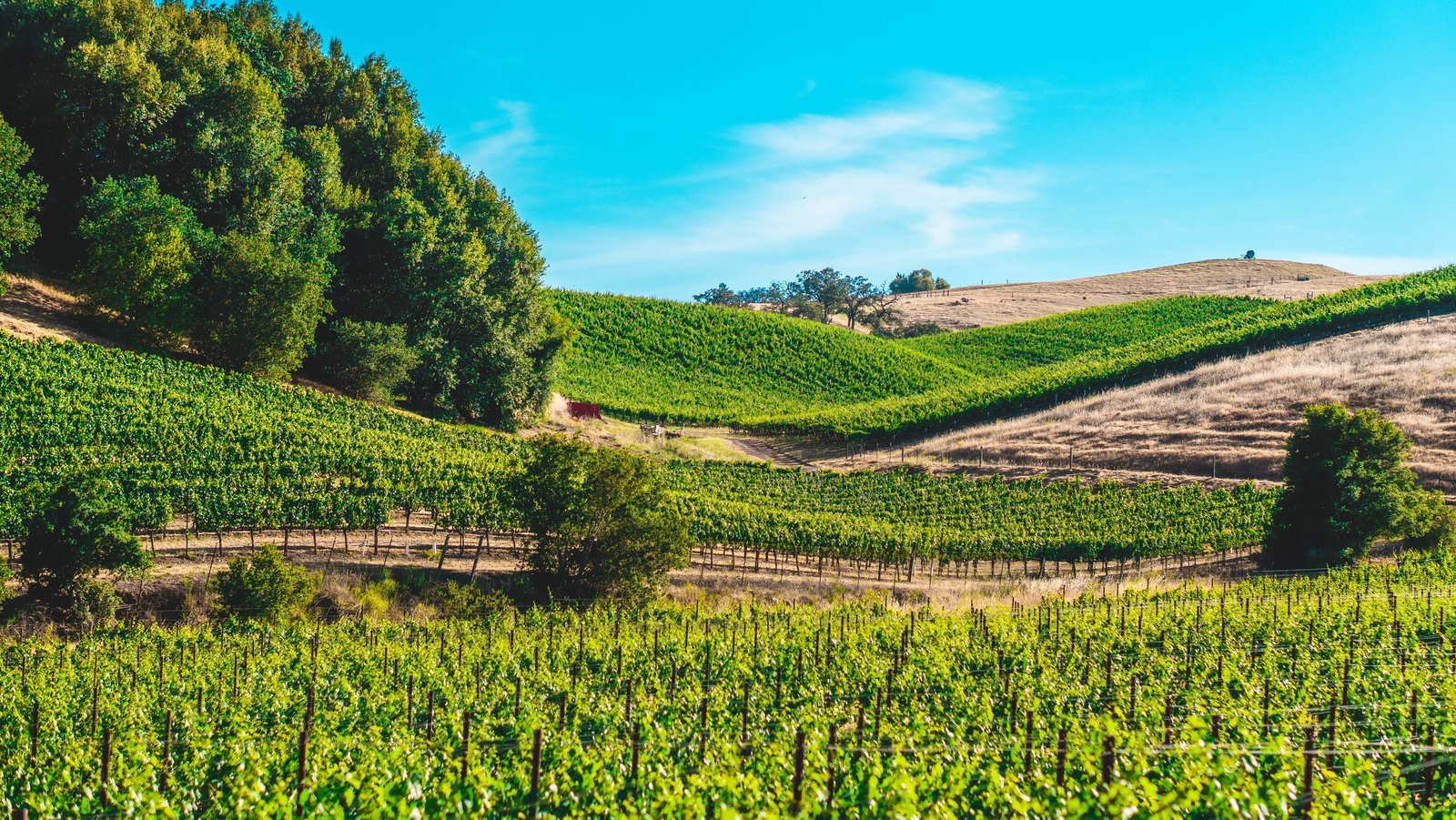
The Granite Belt is the wine region most Australians forget Queensland has. Tucked into the state's far south, hard against the New England border and lifted high onto a granite plateau, it grows grapes at altitudes that reach close to 1,000 metres. That elevation gives it something almost no other Queensland district can claim: a genuinely cool climate, four distinct seasons, cold winter nights and the big day-to-night temperature swings that serious wine grapes love. It is boutique, family-run and refreshingly free of big commercial branding, and for a drinker chasing cleaner, more thoughtful wine, it is well worth understanding.
But this is an organic directory, and honesty about certification is the whole point of it. So here is the straight version up front: the Granite Belt is not a certified-organic hub. When we checked public records and the producers' own accounts, we could not confirm a fully certified organic or biodynamic estate in the region. What we did find is a small handful of growers making a real, verifiable commitment to natural winemaking and low-input farming, plus a climate that quietly does some of the organic work for everyone. This guide separates the two clearly. Where a producer genuinely earns a clean-farming description, we say so and link their listing. Where a famous name cannot be verified as organic, we still tell you about it, but we make no organic claim at all.
Where the Granite Belt sits, and why it matters
The region runs along the granite country south of Warwick, centred on the town of Stanthorpe and the village of Ballandean, with vineyards scattered through Glen Aplin, Severnlea, Thulimbah, Cottonvale and Wyberba. It is roughly three hours inland from Brisbane and sits on the same high tableland that carries into northern New South Wales. The granite itself is not just a name: the decomposed granite soils drain freely and the huge boulders that litter the paddocks store and release heat, both of which shape how the vines grow.
Altitude is the region's signature. At close to 1,000 metres the growing season is cool and the nights are cold, which slows ripening, preserves natural acidity and lets aromatic varieties keep their perfume. It also means the Granite Belt behaves nothing like the warm, humid coastal Queensland most people picture. For clean farming, that high, dry, well-aired setting is a genuine advantage, and it is the backdrop to everything below.
| Region fact | Detail |
|---|---|
| State and setting | Southern Queensland, on the New England Tableland near the NSW border |
| Main towns | Stanthorpe and Ballandean, plus Glen Aplin, Severnlea, Thulimbah, Cottonvale and Wyberba |
| Altitude | Around 800 to 1,000 metres, among the highest vineyard land in Australia |
| Climate | Cool, with four distinct seasons, cold winter nights and wide day-to-night swings |
| Soils | Free-draining decomposed granite, dotted with large heat-storing boulders |
| Signature styles | Verdelho, Chardonnay and Shiraz, plus a strong Strange Bird alternative-variety scene |
| Scale | Boutique and family-owned; small cellar doors rather than large commercial brands |
The honest headline: we could not verify a fully certified organic or biodynamic winery in the Granite Belt. The region's cleaner-wine story is really about natural and low-intervention producers, not certification logos. If certified organic is your hard requirement, treat this region as one to explore carefully and to confirm producer by producer, not as a place to assume the label.
The genuinely low-intervention producers
These are the Granite Belt names whose clean-farming or natural-winemaking claims we could actually stand behind, based on their own published accounts of how they work. None of them, as far as we can confirm, carries organic certification, so we describe them as natural-wine or low-intervention producers rather than certified organic. That is a real and meaningful distinction, and it is exactly the sort of nuance this directory exists to get right. Ratings shown are public Google review figures for the cellar-door experience, not a wine score.
-
Bent Road Winery & DistilleryBallandeanThe region's flag-carrier for natural winemaking. Bent Road works with minimal intervention, hand-picked fruit and wines brought to bottle unfined and unfiltered, some of it fermented in huge terracotta qvevri buried in the earth in the old Georgian way. It is widely cited as one of the very few genuinely organic-minded producers in the Granite Belt, though not certified. Rated 4.9 from 56 reviews.
-
La Petite Mort WineBallandeanBent Road's experimental small-batch label, and one of Queensland's best known natural-wine projects. The wines are made with ancient techniques, fermented in terracotta amphora, unfined and unfiltered, with minimal additions so the raw character of each trial shows through. A genuine minimal-intervention producer rather than a certified-organic one. Rated 5.0 from 12 reviews.
-
Twisted Gum WinesBallandeanA small, hand-tended vineyard perched on a ridge at around 900 metres, farmed with regenerative practices, dry-grown with minimal irrigation, thick mulch under the vines, low yields and hand pruning and picking. That low-input, dry-grown approach is a real clean-farming claim, even without a certification logo. Rated 4.9 from 37 reviews.
-
Savina Lane WinesSevernleaA single-vineyard specialist in Strange Bird varieties such as Fiano, Tempranillo, Graciano and Montepulciano, farmed under a stated do-no-harm philosophy that encourages native wildlife and builds organic soil nutrition rather than reaching for shortcuts. A low-input ethos worth taking seriously, described here honestly as low-intervention. Rated 4.9 from 29 reviews.
Why the careful wording: every one of these producers is described as low-intervention or natural-wine, not certified organic, because that is what the evidence supports. Uncertified does not mean untrustworthy, plenty of honest growers never pay for certification, but it does mean the claim rests on the producer's own practices rather than an independent audit. Farming methods change, so confirm the current approach with the winery before you buy on that basis.
Why the high altitude does some of the organic work
Altitude cannot certify a wine, but it can make clean farming far more achievable, and this is central to the Granite Belt's story. The single biggest reason vineyards spray is fungal disease, and fungal disease thrives in warmth, humidity and still, damp air. The Granite Belt has the opposite. At close to 1,000 metres the nights are cold, the air is dry and airflow across the exposed granite country is good, so the disease pressure that forces heavy chemical programs in warmer, wetter regions is simply lower here. That gives a grower who wants to farm with minimal inputs a real head start.
It also explains why the low-intervention producers above can do what they do. Dry-growing a vineyard, keeping yields low and avoiding routine spraying is a far more realistic proposition in a cool, high, well-drained site than it would be on a humid coastal flat. The climate is not a substitute for careful farming, and it is certainly not a certification, but it is the reason the Granite Belt punches above its weight for thoughtful, lower-input wine. If you want the wider context on what the different clean-wine terms actually promise, our explainer on organic, natural and biodynamic wine is the place to start, and our guide to reading an Australian organic wine label shows you which claims are audited and which are just words.
The honest picture of the wider region
The Granite Belt is far bigger than its handful of natural-wine producers, and it would be dishonest to imply the whole region is organic just because it is small and green. Below are some of the district's most notable and most visited cellar doors. We are including them because they matter to any picture of the region and because they are real listings in our directory, but we are making no organic or biodynamic claim about any of them. Where you see a description in the directory calling a producer organic, treat it as a prompt to check the winery's own account, not as verified fact, which is exactly the standard we hold ourselves to here.
Ballandean Estate is the region's best known name and Queensland's oldest family-owned winery, making wine since the 1930s, and its cellar door is one of the busiest in the district at 4.7 from 272 reviews. Golden Grove Estate is a celebrated pioneer of alternative varieties and a Strange Bird standard-bearer, rated 4.7 from 112 reviews. Symphony Hill Wines at Ballandean is a multi-award winner with a strong reputation for precision whites, rated 4.8 from 125 reviews, while Tobin Wines, on old vines near Ballandean, sits at a high 4.9 from 191 reviews.
Round out the trail with Ravenscroft Vineyard near Stanthorpe, known for its fresh modern styles and rated 4.9 from 93 reviews, Jester Hill Wines at Glen Aplin at 4.7 from 149 reviews, and Kominos Wines, a long-established Glen Aplin producer rated 4.9 from 111 reviews. All are genuinely good places to taste. None is presented here as organic, because we could not verify that they are. That distinction, between a lovely winery and a certified-clean one, is the entire reason to read a directory like this rather than a generic tourism list.
The Granite Belt's cleaner-wine story runs through natural and minimal-intervention makers like Bent Road, not through certification logos. Judge them on stated practice.
Cool, dry air near 1,000 metres lowers disease pressure and makes low-spray farming easier, but it is a head start, not a guarantee. Still ask each grower.
Fiano, Tempranillo, Saperavi and Petit Manseng suit this high, cool site and are where the region's more adventurous, lower-intervention makers shine.
A directory description calling a winery organic is a starting point, not proof. Read the producer's own farming notes, and if it matters, ask at the cellar door.
How to taste cleaner in the Granite Belt
The practical approach is simple. If low-intervention wine is your priority, start your visit with the natural-wine makers: Bent Road and La Petite Mort for amphora-fermented, unfined and unfiltered bottles, Twisted Gum for dry-grown regenerative reds and whites, and Savina Lane for low-input Strange Bird varieties. Those four give you a genuine, evidence-backed taste of what cleaner Granite Belt wine looks like, and they happen to make some of the region's most characterful bottles anyway.
From there, treat the wider region as an open, honest exploration rather than a set of assumptions. Plenty of the estates above may farm more cleanly than their marketing spells out, and a few may not. The only way to know is to ask the grower directly how they work in the vineyard, which varieties are dry-grown, what their spray policy is, and whether anything is certified. That is the same discipline we apply before badging any producer here, and it is the fastest way to drink well and honestly in a region that rewards curiosity. When you want to go deeper on value and style, our guide to organic wine under $25 and our roundup of the best organic Shiraz in Australia are useful companions.
The bottom line
The Granite Belt is one of Australia's most distinctive wine regions: high, cool, granite-strewn and full of alternative varieties you will struggle to find anywhere else. It is not, though, a certified-organic destination, and the honest move is to say so plainly. Its cleaner-wine credentials rest on a small group of genuine natural-wine and low-intervention producers, led by Bent Road and La Petite Mort and joined by dry-grown growers like Twisted Gum and low-input specialists like Savina Lane, all helped along by a high-altitude climate that keeps disease pressure down. Enjoy the famous names for what they are, hold the organic claim to a real standard, and let the directory help you tell the difference. To see every Granite Belt cellar door in one place and read each producer's listing before you visit, start with the full directory.